Historic District
Downtown
Ponca City
Established after the Cherokee Strip Land Run of 1893 — historic architecture, thriving restaurants and bars, art, murals, live music, and unique local shopping on Grand Avenue.
Ponca City, Oklahoma
01
01 — History
Built on Oil, Shaped by Fire
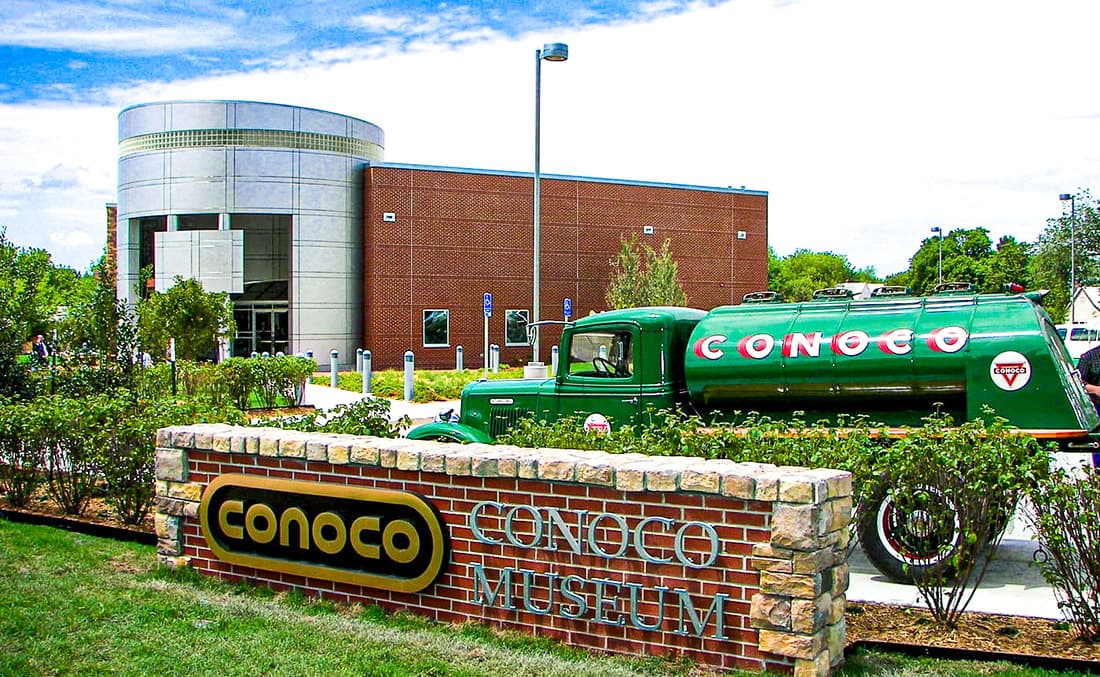
Ponca City was established in the chaos and excitement of the Cherokee Strip Land Run on September 16, 1893 — one of the largest land rushes in American history. The young town survived a devastating fire in 1900 that burned much of the original settlement, then rebuilt in brick and mortar, laying the architectural foundation that still defines Grand Avenue today. The discovery of natural gas around 1905 set the stage for what was coming: the extraordinary oil boom of the 1920s, when oilman E.W. Marland built a fortune here and made Ponca City one of the wealthiest cities per capita in the United States. The Royalty Office Building (1923), the Union Bus Station (1926), and the magnificent Poncan Theatre (1927) all rose in this era of civic ambition. The Depression ended the extravagance, but the architecture endured — preserved by both pride and economic circumstance — giving downtown the remarkable bones it still carries today.
Nearly 100,000 settlers raced across the Cherokee Strip in a single day — and Ponca City rose from the Oklahoma prairie almost overnight.
Cherokee Strip Land Run — 1893
Great Fire & Rebuilding — 1900
E.W. Marland Oil Boom — 1920s
Poncan Theatre built — 1927
Main Street Program — est. 1988
Public murals era — 2000s–present
02
02 — Dining & Drinks
Restaurants, Bars & Cafes on Grand Avenue
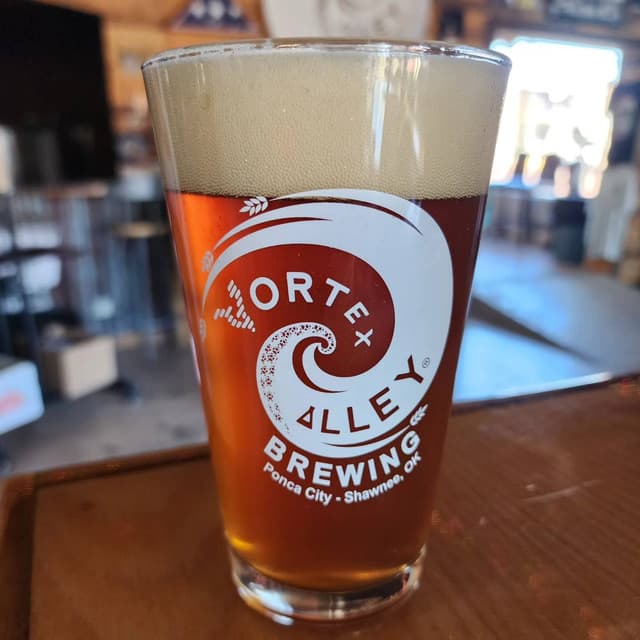
Downtown Ponca City's dining scene ranges from fine dining in restored historic buildings to neighborhood cafes, craft beer taprooms, and beloved lunch spots. Grand Avenue and the surrounding blocks offer an impressive variety for a walkable downtown. Whether you're starting with coffee at a local cafe, lingering over a long lunch, or settling in for dinner, the food and drink options are genuinely excellent. Many restaurants feature local sourcing, chef-driven menus, and interiors that showcase the neighborhood's architectural character. Craft beer taprooms occupy old storefronts, wine bars anchor corners of the district, and late-night spots keep the block alive after sundown.
From a morning coffee in a restored storefront to a candlelit dinner in a century-old building — eating downtown is an experience, not just a meal.
Fine dining in historic buildings
Local cafes and coffee roasters
Craft beer taprooms
Wine bars and cocktail lounges
Diverse cuisine options
Walkable block to block
03
03 — Arts & Culture
The Poncan, Galleries & the Mural Walk
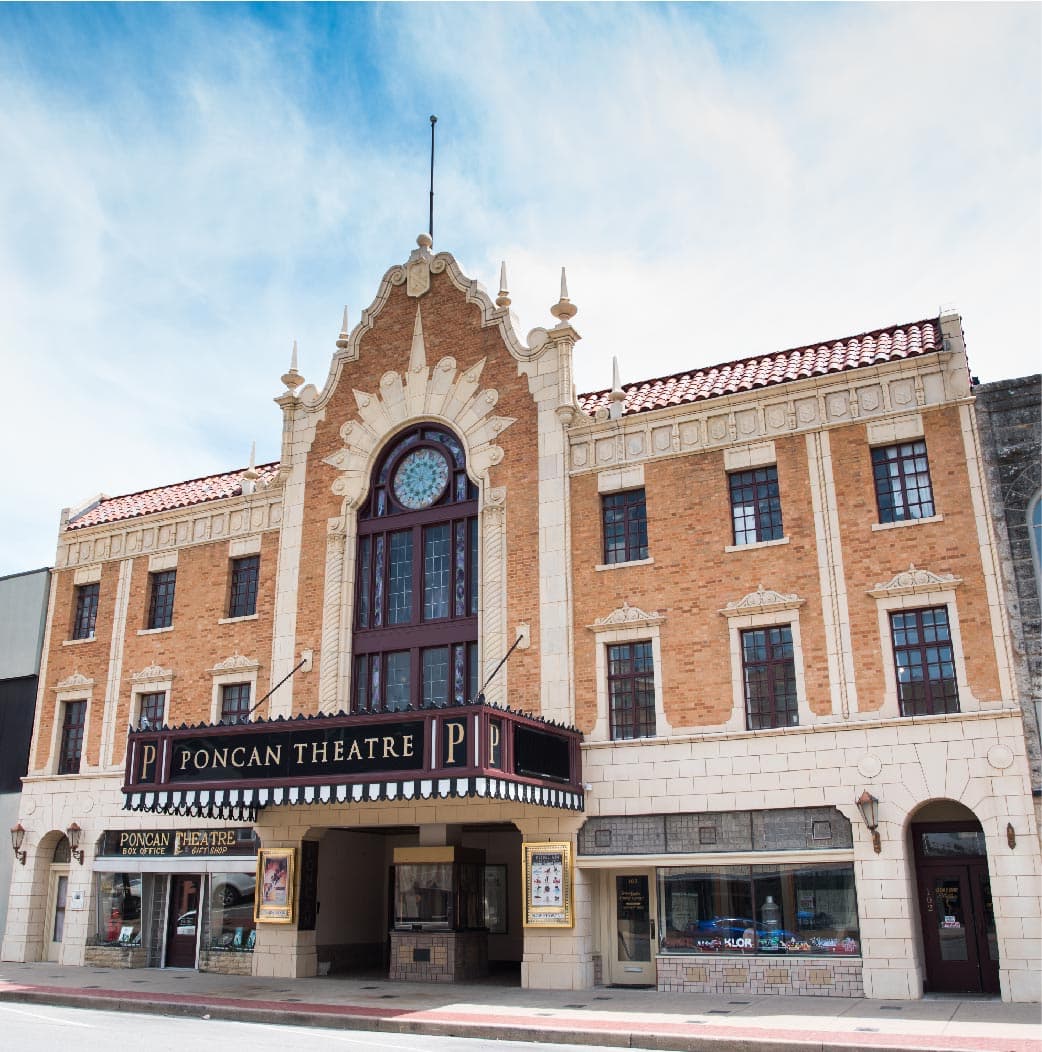
Downtown Ponca City is an arts destination in its own right. Art galleries showcase regional and local talent, while an outdoor mural collection spans walls and alleyways throughout the district. A self-guided walking tour of the murals connects visitors to the stories behind the imagery — from the city's oil heritage to its Native American history to contemporary community narratives. The Poncan Theatre, built in 1927 in the Spanish Colonial Revival style, remains the crown jewel of the downtown arts scene, hosting live productions, concerts, and film screenings in a spectacularly preserved interior. The Evans Children's Academy of Performing Arts brings youth performance into the cultural mix, and rotating gallery shows keep the visual arts calendar full year-round.
The Poncan Theatre is one of Oklahoma's finest preserved historic venues — a 1927 jewel still drawing audiences nearly a century after opening night.
Poncan Theatre — live shows and cinema
Self-guided mural walking tour
Regional art galleries
Evans Performing Arts Academy
Cultural events throughout the year
Spanish Colonial Revival architecture
04
04 — Shopping
Boutiques, Vintage & Local Finds
Downtown shopping in Ponca City means boutiques, vintage stores, antique shops, and specialty retailers that you won't find anywhere else. Browse local boutiques for clothing, jewelry, and gifts. Dig through antique shops stocked with oil-era memorabilia, mid-century finds, and Oklahoma curiosities. Specialty home goods stores and local artisan studios fill in the gaps. The shopping experience is as much about the architecture and atmosphere as the merchandise — walkable, friendly, and distinctly Ponca City. Many shop owners have been on Grand Avenue for decades, and the community feel is evident in every block.
Downtown shopping means boutiques and antique shops you won't find in any mall — the kind of places where the building itself is part of the experience.
Local clothing and gift boutiques
Vintage and antique shops
Oil-era memorabilia and collectibles
Home goods and specialty stores
Artisan studios
Walkable Grand Avenue district
05
05 — Key Landmarks
Grand Avenue, Veterans Plaza & the Marland Legacy
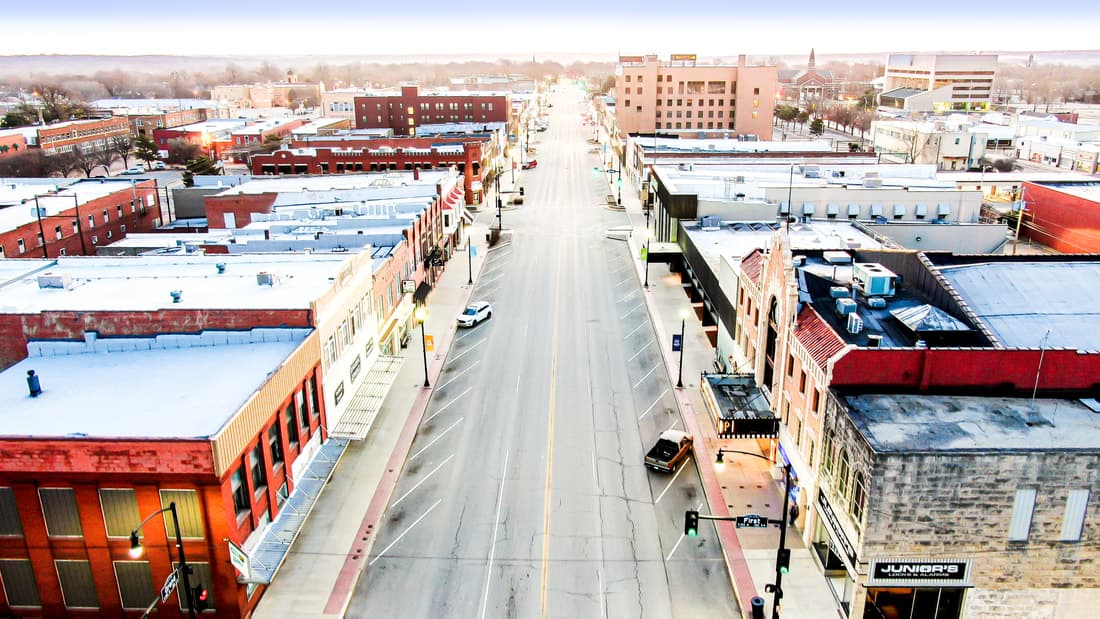
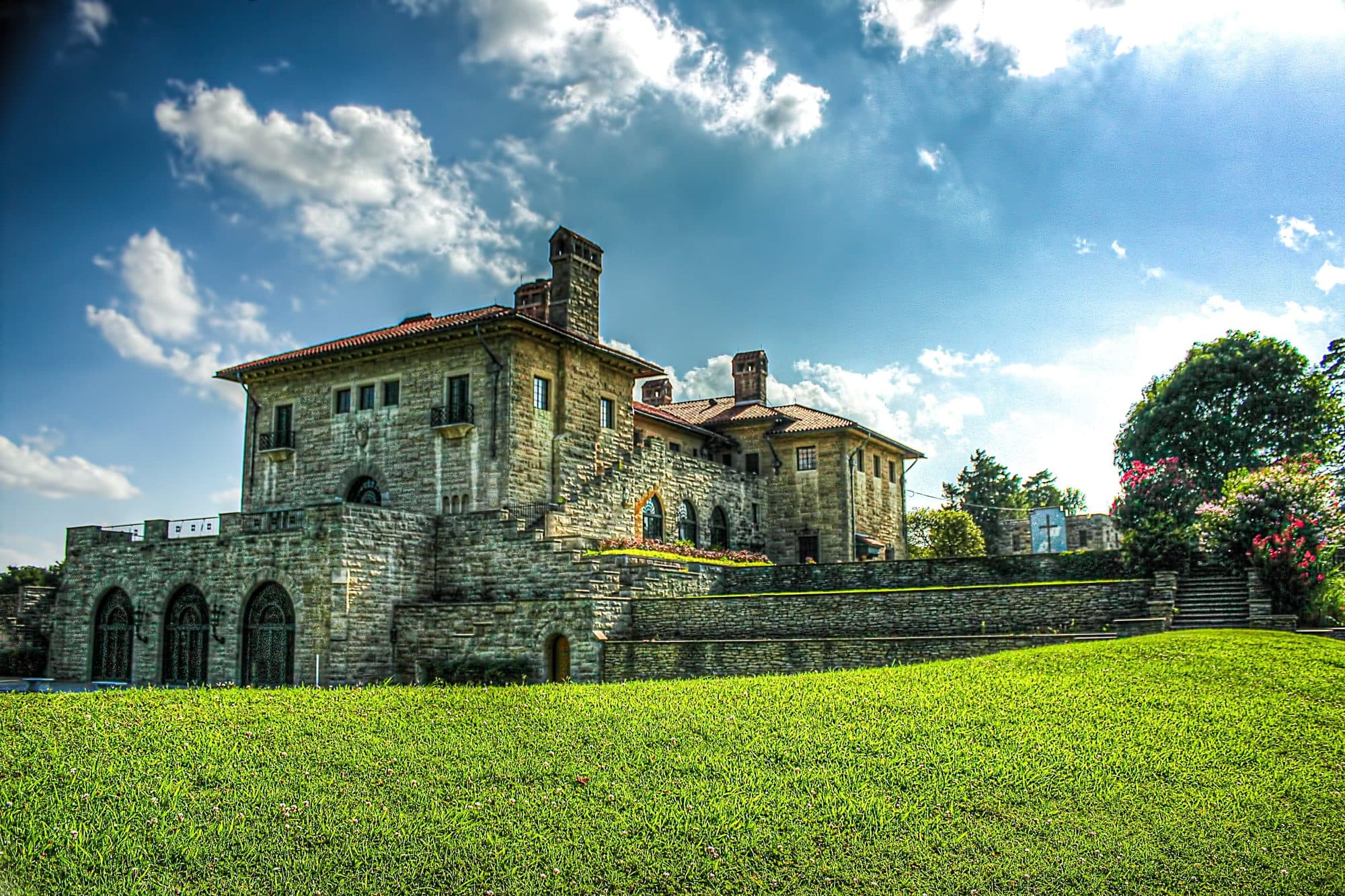
The physical fabric of downtown Ponca City is one of its greatest assets. Grand Avenue runs through the heart of the Historic District, lined with beautifully preserved early 20th-century commercial architecture whose integrity is genuinely remarkable. At 323 E Grand Avenue, Veterans Plaza serves as the civic heart — a central gathering point for community events, holiday celebrations, and the annual Veterans Day ceremonies that draw thousands. Just outside the immediate downtown, the Marland Mansion stands as the most visible monument to the oil boom era: a 55-room Italian Renaissance palace that E.W. Marland built at the height of his fortune, now a museum and one of Oklahoma's most extraordinary historic house museums. Together, these landmarks tell the full story of a city that has never stopped caring about its own history.
Grand Avenue is one of Oklahoma's most intact early 20th-century commercial streetscapes — the kind of place that makes you slow down and look up.
Grand Avenue Historic District
Veterans Plaza — 323 E Grand Ave
Marland Mansion — 55-room palace
Royalty Office Building — 1923
Union Bus Station — 1926
Poncan Theatre — 1927
Ready to Explore?
Plan a Day Downtown
Walk the murals, catch a show at the Poncan, and discover what is happening on Grand Avenue.
More Guides